Wet Shaving for Men & Women – Differences, Techniques & Brand Recommendations
Summary: A close, comfortable shave rests on three pillars: proper preparation, the right tools, and a technique that matches your skin and hair. In this in-depth EU guide you’ll find a comparison of cartridge razors, safety razors and open razors/shavettes, step-by-step routines for face, legs, underarms and bikini line, troubleshooting solutions and brand profiles (Erbe, Merkur, Dovo, Bolin Webb, êShave). Where useful, we link to relevant categories in our shop.
Why wet shaving is a smart choice
Whether you want sharp beard lines, silky-smooth legs or irritation-free underarms and bikini area: wet shaving maximizes control over glide, blade angle and skin protection. Across Europe, many choose cartridge razors for speed and convenience, but safety razors and open razors are growing in popularity thanks to lower cost per shave, less waste and noticeably smoother results. This guide helps you choose and links to cartridge & wet razors, safety razors and open razors & shavettes.
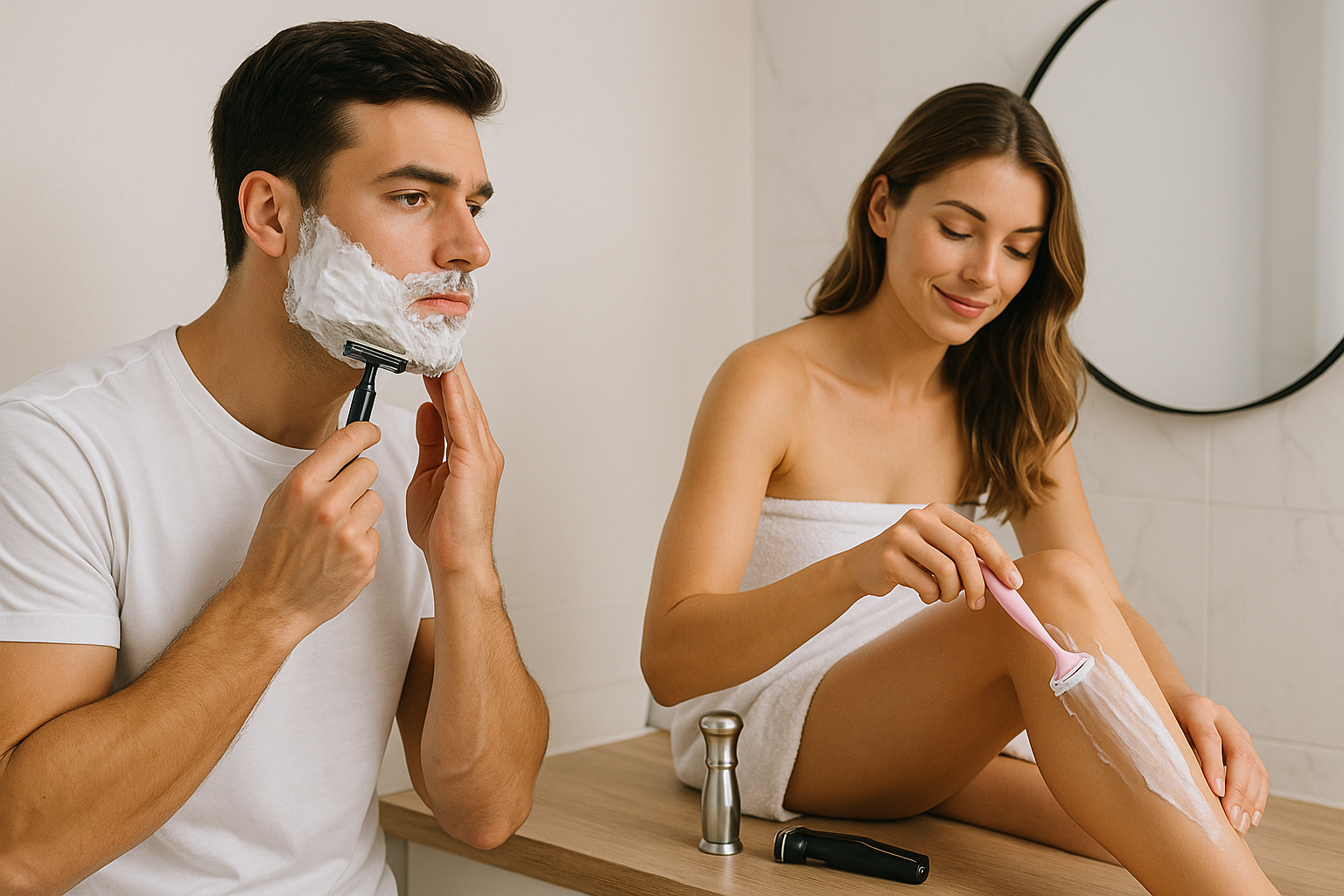
1) Men vs. women: what actually differs?
Hair & skin set the tone
Men (face/neck): facial hair is thicker and often curly. The T-zone produces more oil, making skin react faster to excess pressure or wrong angle. The recipe: shallow angle, minimal pressure, frequent rinsing.
Women (legs/underarms/bikini): larger surfaces with finer hair and sensitive zones need consistent slick lather, long steady strokes and forgiving heads.
Motion patterns by zone
Face/neck: short, controlled strokes at a flat angle; guide, don’t push.
Legs/underarms: long, even passes with rich lather; slow pace avoids micro-nicks.
Bikini line: start with hair growth, shorten strokes, minimize pressure, rinse often.
Preparation is the accelerator
Warm water softens hair, pre-shave boosts glide, and stable lather from cream or soap keeps blades cutting instead of scraping. That’s the difference between “okay” and “outstanding.”
2) Tools compared – the big overview
| Criterion | Cartridge razor | Safety razor (DE) | Open razor / Shavette |
|---|---|---|---|
| Learning curve | Low, forgiving | Medium | High |
| Closeness | Good | Very good | Excellent |
| Skin friendliness | Good with light pressure | Very good | Very good with perfect technique |
| Time | Fast | Medium | Longer |
| Ongoing costs | Higher | Low | Low |
| Sustainability | Medium | High | Very high |
| Detail & contour | Fair | Very good | Perfect |
Cartridge razors – comfort & speed
Multi-blade cartridges with pivoting heads are forgiving – perfect for fast routines and larger areas like legs. Formula: zero pressure, clean glide, timely cartridge change. See wet & cartridge razors.
Safety razors – precision, sustainability, low costs
One sharp blade cuts at the correct angle, no scraping. Result: close finish with less irritation. A growing choice in EU markets thanks to low blade prices and eco benefits. Explore safety razors.
Open razors & shavettes – tradition at its best
For ultimate sharpness and defined lines. A shavette with replaceable blades is a smart entry before a full straight razor. See open razors & shavettes.
3) Preparation & skin analysis
Sensitive skin: pre-shave, dense lather, alcohol-free balm.
Combination/oily: fresh blades, lighter creams, cool rinse.
Dry: richer creams, lukewarm water, nourishing balm.
4) Wet shaving for men
Cartridge: quick and forgiving. Guide gently, rinse often. See cartridges.
Safety razor: shallow angle, minimal pressure, short strokes. See safety razors.
Open razor/shavette: crispest contours, ultimate closeness. See open razors.
5) Wet shaving for women
Cartridges are easy on legs & underarms; safety razors give softness with less irritation. Preparation: warm shower, gentle exfoliation. Aftercare: mild alcohol-free balm. See aftercare.
6) Technique deep-dive
Angle: ~30°. Zero pressure. Calm, even strokes. By zone: neck – with/then across the grain; legs – divide in micro-zones; bikini – shorter strokes, more rinsing. Many combine: cartridges weekdays, safety razors weekends.
7) Troubleshooting common issues
Razor burn: lower pressure, new blade, fresh lather.
Ingrowns: exfoliate, keep angle shallow.
Tugging: change blade, lather wetter.
Breakouts: cleanse, cool rinse, clean brush.
Allergies: fragrance-free, alcohol-free.
Nicks: less pressure, alum block, hydrate.
Blue cast: low angle, calm pace, optional second pass.
8) Care & hygiene
- Rinse blade during shave
- Dry thoroughly, air-dry on stand razor stands
- Store dry, out of steam
- Brush: rinse well, dry knot-down shaving brushes
9) Eco & Sustainability
In the EU, sustainability matters. Disposable cartridges create plastic waste, while safety razors and open razors use metal blades that are fully recyclable. Over years, costs drop significantly, making eco-friendly shaving both budget- and planet-friendly. More and more Europeans switch to sustainable razors to cut waste and enjoy premium results.
10) Buying Criteria – what really counts
- Handle material: stainless steel, wood or resin affect grip, balance and longevity.
- Balance: well-balanced razors feel safer and need less pressure.
- Blade availability: DE blades are cheap and widely available across EU.
- Maintenance: open razors need stropping/honing, safety razors only blade change.
- Replacement parts: stands, brushes and creams are easy to find in our razor & accessories category.
11) Brand profiles
- Erbe: complete grooming basics, brushes, stands, care. Trusted EU brand. Erbe.
- Merkur: Solingen-made safety razors, from mild closed combs to adjustable models. Popular in EU for irritation-free shaving. Merkur.
- Dovo: Solingen craftsmanship in open razors, ideal for purists seeking sharpness. Dovo.
- Bolin Webb: award-winning UK design, ergonomic cartridge razors that stand out. Bolin Webb.
- êShave: New York brand focusing on pre-shave, creams and aftercare – perfect for sensitive skin. êShave.
12) Quick buying guide
Men: hurry = cartridge; control = safety razor; ambitious = open razor. Prep: pre-shave + lather. Aftercare: balm. Accessories: stand, brush.
Women: large areas = cartridge; softness = safety razor. Prep: warm shower + exfoliation. Aftercare: lotion or balm.
13) FAQ
How often change DE blade? 3–7 shaves.
Safety razor for legs? Yes, with light pressure and slick lather.
Is an open razor too hard? Start with shavette, then move up.
How to avoid blue shadow? With the grain, then across, optional against. Low angle, fresh lather, soothing aftercare.
14) Conclusion
Cartridge razors are quick and forgiving. Safety razors combine precision, eco-friendliness and low cost. Open razors deliver the ultimate closeness. Combine good prep, careful technique and consistent aftercare, and you’ll enjoy convincing results every day.
See safety razors · See cartridge & wet razors · See open razors · See shaving creams